
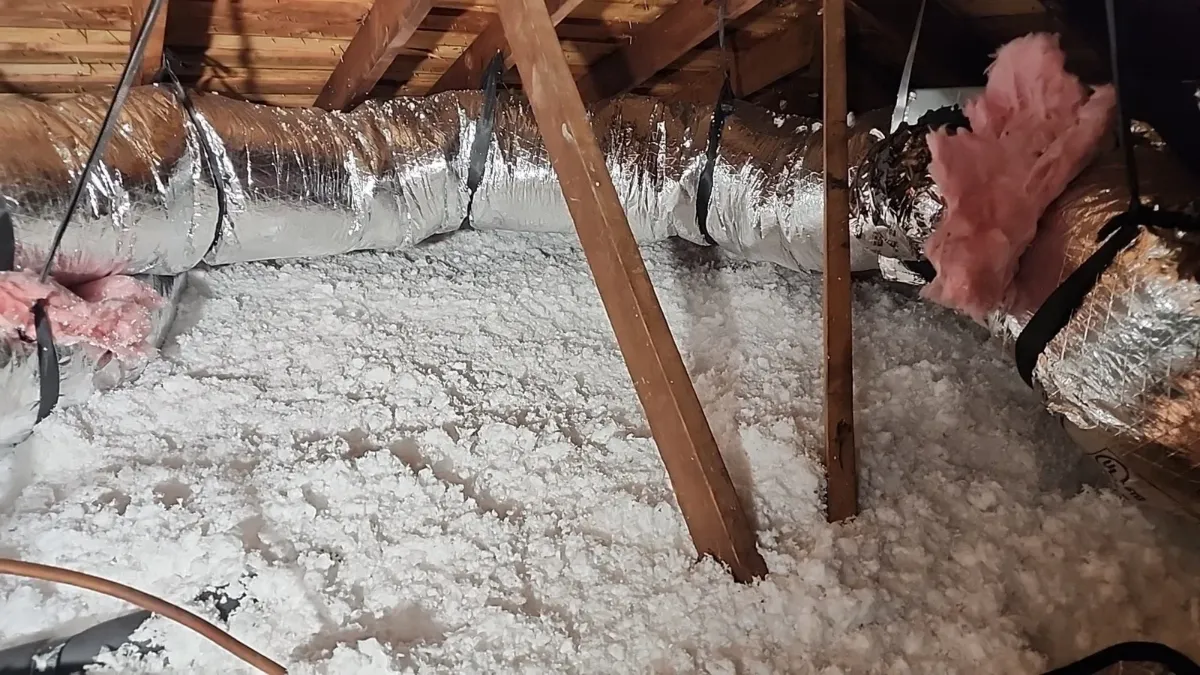
If your home was built before modern energy codes, adding insulation to attic with existing insulation is the fastest way to slash winter heating bills—especially in electrically heated New Brunswick homes where 50% of energy use goes toward heating ↗ NB Power.
When Can You Layer Added Insulation for Attic Over Old Material?
Per ENERGY STAR building guidelines, you do not have to use the exact same material when adding insulation to attic with existing insulation ↗ ENERGY STAR. You can blow cellulose or unfaced fiberglass directly over old fiberglass batts or rockwool as long as the existing layer is dry and free of mold ↗ ENERGY STAR.
| Existing Attic Condition | Recommended Action | Target R-Value |
|---|---|---|
| Dry, settled R-12 to R-20 batts | Air seal top plates & blow cellulose over top | R-60 ↗ NB Power |
| Wet, moldy, or rodent-soiled insulation | Full extraction before installing new material | R-60 ↗ ENERGY STAR |
| Paper- or foil-faced top layer | Remove or slash vapor barrier before adding layers | R-60 ↗ ENERGY STAR |
3 Rules for Added Insulation for Attic Projects
- Never Trap Moisture with Faced Insulation: Never install paper- or foil-faced batts on top of existing insulation, as double vapor barriers trap condensation ↗ ENERGY STAR.
- Keep Soffit Vents Clear: Install rigid ventilation baffles at the eaves so added insulation for attic floors never blocks intake airflow.
- Air Seal First: Seal wiring penetrations and wall top plates before blowing in fresh material.
--- Sources & Building Science References: ENERGY STAR — Adding Attic Insulation Over Existing Insulation NB Power — Home Insulation R-Value Recommendations